Hydroseeding in East Texas: Cost, Timing and What to Expect
Hydroseeding is the cheapest way to get a full lawn on a big East Texas lot, but it only works if the timing and the watering are right. Here is how it actually goes in Gregg and Harrison County soil.
What hydroseeding actually is
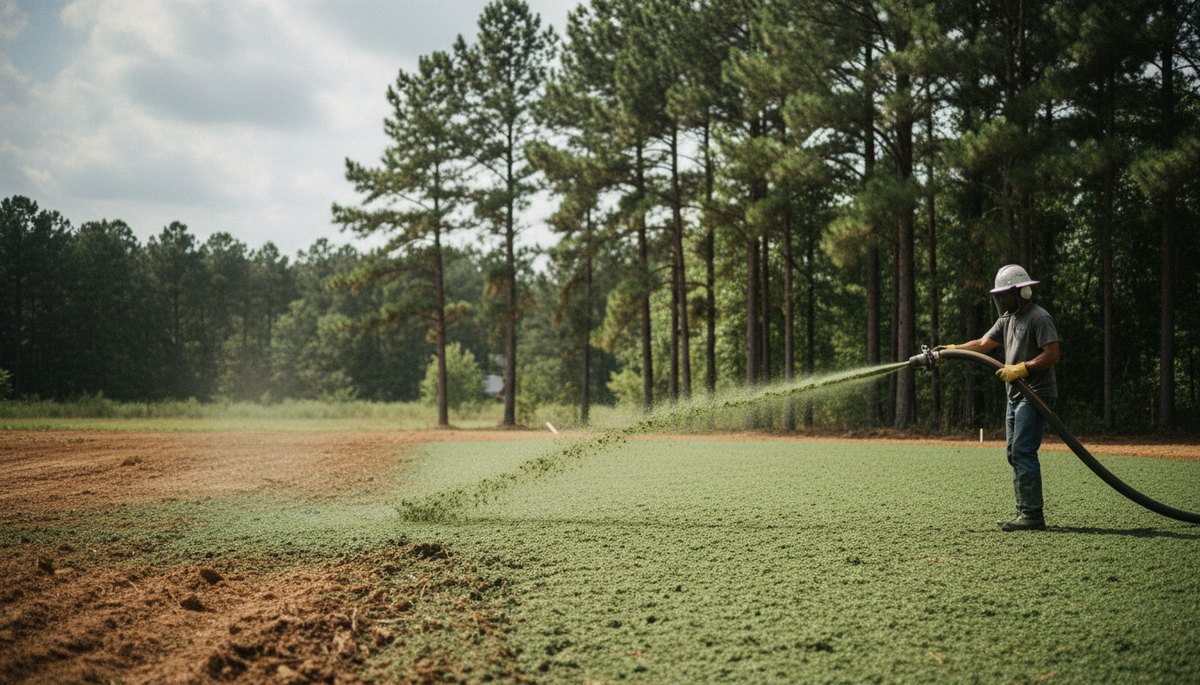
Hydroseeding is grass seed, mulch, fertiliser and a tackifier mixed into a slurry and sprayed across prepared soil. The mulch holds moisture against the seed and the tackifier stops the whole lot washing into the street the first time East Texas gets a proper downpour.
It is not "spraying green paint on dirt", which is the impression most people have. The green tint is just dye in the mulch so the operator can see what has already been covered.
Hydroseeding vs sod in East Texas
| Hydroseeding | Sod | |
|---|---|---|
| Cost per square foot | Considerably lower | Higher |
| Time to a usable lawn | Weeks | Immediate |
| First green showing | Roughly 7 to 10 days in season | Day one |
| Watering demand | High, and unforgiving early on | High, but more tolerant |
| Best suited to | Large lots, slopes, erosion control, budget projects | Small yards, flips, anywhere you need it finished now |
The short version: if you have an acre and time, hydroseed. If you have a quarter acre and a house going on the market, sod.
When to hydroseed around Longview and Kilgore
Timing matters more here than most people expect, because our summers punish new seed.
- Spring, roughly March into May. Soil has warmed, rain is regular, and seed has months to root before real heat arrives. This is the best window for warm-season grasses.
- Early autumn, September into October. The second-best window. Heat is easing but the ground is still warm enough for germination.
- Deep summer, July and August. Possible, but only if you can water reliably. Seed that dries out once at 98 degrees does not come back.
- Winter. Not worth it for warm-season grass. Soil is too cold for germination and the seed simply sits there.
The part that decides whether it works: watering
Almost every failed hydroseed job comes down to watering, not to the seed or the crew.
- Days 1 to 14. The surface must stay damp. That usually means light watering two or three times a day, not one long soak.
- Weeks 3 to 4. Water less often but for longer, so roots chase the moisture downward instead of staying at the surface.
- After first mow. Move to a normal deep-and-infrequent schedule.
- Keep off it. Foot traffic and dogs in the first two weeks will thin it out in exactly the places you walk.
Why East Texas clay changes the job
Much of Gregg, Harrison and Rusk County sits on heavy clay. Clay holds water at the surface rather than letting it drain, which cuts both ways for hydroseeding. It means the surface stays damp longer, which helps germination. It also means that on any slope, water runs off rather than soaking in, taking seed with it.
On sloped clay lots the tackifier and the mulch rate matter far more than the seed blend. That is a preparation decision, made before anything is sprayed.
What drives the price
Anyone quoting hydroseeding sight unseen is guessing. What actually moves the number:
- Total square footage, since the cost per square foot falls as the area grows
- Whether the ground needs grading, tilling or topsoil before seeding
- Slope, which changes the mulch and tackifier rate
- Seed blend, since Bermuda, Zoysia and Centipede are not priced the same
- Access for the truck and hose
StClair Outdoors gives same or next-day estimates across Longview, Kilgore, Hallsville and Diana, and we will beat a comparable written quote.
Common questions
How long until I can mow?
Usually three to four weeks, once the grass is around three inches. Mow high on the first cut and make sure the blade is sharp, because a dull blade tears young grass out by the roots.
Will it wash away if it rains?
A normal rain is fine and actually helps. The tackifier is there precisely for this. A severe storm in the first few days on a steep slope can cause channelling, which we can patch.
Can I hydroseed over an existing patchy lawn?
Overseeding into thin turf can work, but seed needs contact with soil, not thatch. If the existing lawn is more weed than grass, killing it off and starting clean gives a far better result than spraying over the top.
How long before it looks like a real lawn?
Green fuzz in one to two weeks. Something you would call a lawn in six to ten weeks. Fully knitted in and hard-wearing by the following season.
Is hydroseeding good for erosion control?
Yes, and it is one of the strongest reasons to choose it. On a bare slope the mulch layer protects the soil immediately, before the grass has done anything at all.
Get a number for your lot
Every property is different, and square footage, slope and prep change the price more than anything else. StClair Outdoors is family-owned and based in Kilgore, serving Longview, Hallsville, Diana and the surrounding area.
Call or text (903) 808-2993 for a free estimate, usually same or next day.